


Downtown Mafia: Gang Wars Game
4.5647.00 Reviews
App Specs
- Version
- 0.9.40
- Updated On
- License
- Free
- Downloads
- 5,000,000+
- Developer
- DYNAMICNEXT
- Categories
- Role Playing
- Platform
- Android
Screenshots
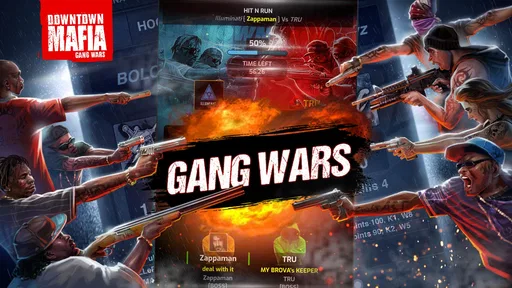

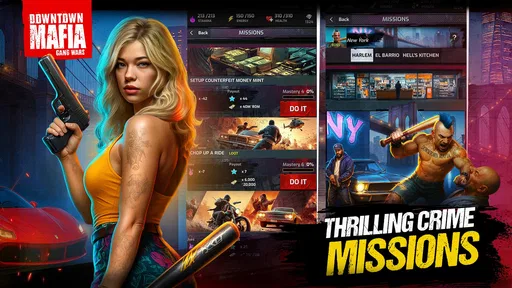
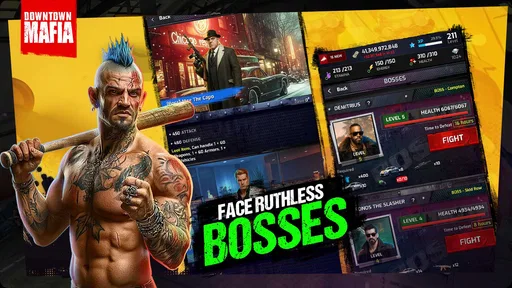
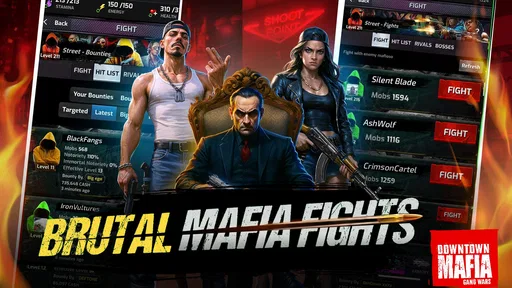

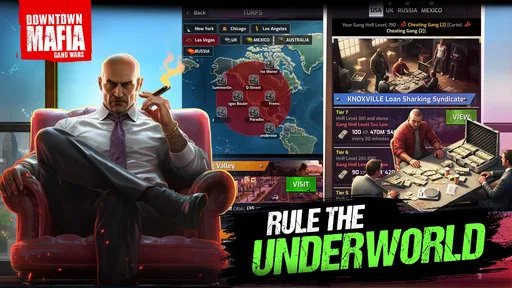
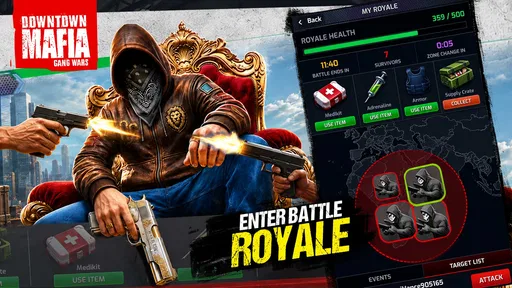
 Analysis by AppCompare
Downtown Mafia: Gang Wars Game is the kind of role-playing game I open when I want a quick crime-themed decision rather than a long session of exploration. Its presentation is built around text, menus, progression choices, and social competition, so the experience asks me to imagine the streets more than it asks me to walk through them. That is its central appeal: the game turns a mafia setting into a compact routine of checking progress, making choices, improving a character, and returning later.
After spending time with it, I found a game with a very particular personality. It is not trying to replace a cinematic action title, and it does not offer the visual spectacle of a modern open-world crime game. Instead, DYNAMICNEXT focuses on the older browser-game style of role-playing, where the satisfaction comes from gradual growth and from seeing a small decision improve my position in a larger criminal network. The best way to understand it is as a persistent text-based crime RPG with social pressure, not as an action game in miniature.
The game is free to start, with optional purchases ranging from $0.99 to $99.99 per item. It is rated Teen, which fits the criminal theme and the rougher tone suggested by the setting. The current version is 0.9.40, and it runs on Android 7.0 or later. Those details matter because this is an easy game to approach on an older compatible device, but its long-term appeal depends much more on whether I enjoy incremental systems than on hardware performance.
Entering a Text-Driven Criminal World
I’ll focus on how the game establishes its crime-world atmosphere through text and player choices, rather than through action or elaborate visuals. That distinction is useful from the start: it helps set expectations for the kind of role-playing the game offers and leads naturally into what makes its understated approach work.
A first impression built from imagination
My first impression was shaped less by visual impact and more by the way the game frames ordinary actions as steps in a criminal career. The interface presents the city through words, labels, progress indicators, and selectable activities. That can feel modest if I arrive expecting animated fights or a detailed map, but it also gives the game room to establish a personal rhythm. I am not watching a gangster story unfold; I am managing my place inside one.
This approach makes the opening accessible. I do not need to learn a complicated control scheme, aim accurately, or memorize a large environment. I can read the available choices, decide what deserves attention, and gradually understand how the different parts of my criminal life connect. The learning curve is less about reflexes and more about recognizing which actions are worth repeating and which upgrades support the way I want to play.
That simplicity has a trade-off. Text-heavy games depend on the player supplying some of the atmosphere. If I need expressive characters, dramatic cutscenes, or a constantly changing visual city, the initial presentation may seem bare. The game gives me a framework, but my imagination has to complete the streets, hideouts, rivalries, and danger. I found that limitation easier to accept once I stopped judging it against console crime games.
Worth Reading Before You Choose

EA SPORTS FC Mobile 26 Is a Bigger Football Game, but It Takes Time

Flipboard Shows What News Apps Must Do Beyond the Feed

Switching to Android Auto Means Rethinking Your Driving Routine

Google Calendar Makes a Crowded Week Easier to Manage

Ludo King Makes the Most of the Minutes Between Plans

Baby Panda World Brings Quick Play to Modern Phones, but Its Game Library Feels Busy
The title also benefits from being played in short visits. I can check what needs attention, make a few decisions, and leave without feeling that I abandoned a complicated story mission. That makes it a practical choice for a commute, a waiting room, or a quick break. It is less suitable for someone looking for a single uninterrupted adventure with a strong beginning, middle, and ending.
How the city communicates without a large visual map
The setting works through vocabulary and structure. Words associated with gangs, status, money, territory, and criminal ambition do much of the artistic work. The city feels like a system of relationships rather than a place I physically traverse. Each menu or choice contributes to the idea that I am building influence one step at a time, even when the action itself is represented by a simple text interaction.
I especially like how this presentation leaves space for the social side of the fantasy. A mafia game can easily become only a collection of fights, but a text-based format naturally draws attention to reputation, timing, and the position of other players. The sense of belonging to a wider criminal community is more important here than visual detail. That is one reason the game can still feel distinctive despite its restrained presentation.
There is also a useful mental shift involved. In a conventional role-playing game, I usually ask where I should go next. Here, I ask what kind of criminal I am trying to become and which routine moves me closer to that goal. That makes the game feel closer to managing a small online identity than controlling a traditional hero. Players who enjoy planning around limited opportunities may find more depth here than the simple interface initially suggests.
One practical tip is to read the wording of activities carefully instead of tapping through them automatically. In a game where the city is communicated largely through text, those labels are not decoration. They tell me what kind of action I am taking and help me decide whether it fits my current priorities. Rushing through every option can turn the experience into a dull checklist; paying attention to the language helps preserve the role-playing element.
Sound, silence, and the pace of a criminal routine
The mood of this game comes primarily from its text and its repeated cycle of decisions, not from a soundtrack carrying every scene. That quietness can be a strength. I can play it while listening to my own music or while sitting somewhere that would make a louder game inconvenient. The lack of constant audiovisual drama also reinforces the idea that this is an ongoing operation rather than a sequence of explosive set pieces.
At the same time, players who expect a rich soundscape should adjust their expectations. The atmosphere is more like reading a compact crime-themed dashboard than entering a fully staged film. The emotional weight comes from what a decision means for my progress, not from voice acting or a musical cue telling me that a major moment has arrived.
The pacing is deliberately repetitive. I perform an action, consider the result, improve my position, and return later to continue. That loop can be calming when I want something predictable, but it can also feel slow if I need constant novelty. I found that the game works best when I treat the rhythm as part of the design rather than waiting for it to transform into an action adventure.
A realistic everyday use case is a short morning check before work. I can review my current objectives, make a few progress-oriented choices, and close the game without losing the whole evening. Later, I can return with a clearer idea of what I want to improve. This makes the game a good companion for fragmented free time, although it may frustrate anyone who wants every session to deliver a major story beat.
Where the role-playing mechanics fit the atmosphere
The mechanics and presentation generally support each other. Because the world is text-led, the focus falls on progression and decision-making. I am encouraged to think about the next useful improvement, the value of continuing a routine, and how my choices contribute to a longer-term criminal identity. The game does not need elaborate animation to communicate that I am climbing through a hierarchy; the progression itself carries the fantasy.
The social MMORPG angle is important to the overall mood. A solitary crime story would make the city feel like a backdrop, but the online role-playing structure suggests that other people are part of the pressure and comparison. That gives ordinary progress more meaning. Improving my character is not only about personal strength; it is also about how I measure up within a wider community of players.
My strongest non-obvious observation is that the interface encourages a different kind of role-playing from a dialogue-heavy RPG. I am not choosing a personality through long conversations. I am expressing that personality through priorities: whether I focus on steady growth, social standing, competition, or efficient routine. The game is therefore better for players who enjoy defining a character through management decisions than for players who need branching narrative choices.
Another useful trade-off is the relationship between convenience and depth. Text-based actions are quick to understand and easy to repeat, but their simplicity means that the excitement must come from consequences over time. If I only play once and judge every action in isolation, the experience can seem thin. When I return regularly and compare my position with my earlier state, the incremental design becomes more satisfying.
The free entry point also makes experimentation easier. I can see whether the loop suits me before committing money. However, the presence of optional purchases means I should decide in advance how I want to approach progression. Players who enjoy earning improvements slowly may prefer to treat purchases as entirely optional and focus on the core routine. Players who dislike any temptation to accelerate progress should be aware of that structure before settling into the game.
For me, the smartest workflow is to choose one short-term target and one longer-term target rather than trying to improve everything at once. The short-term goal keeps a session focused, while the longer-term goal prevents random tapping from becoming the whole experience. This is especially useful in a game where repeated actions can blur together. A small personal plan gives the text-based loop more purpose.
Who will enjoy it, and who should choose something else
I would recommend this game to people who like classic browser-style RPGs, idle progression, crime settings, and social competition without demanding graphics. It is also a good fit for players who prefer games that can be checked in brief sessions. The combination of persistent advancement and a compact interface makes it less demanding than a real-time role-playing game, while still giving me a reason to return.
I would not recommend it to someone mainly looking for driving, shooting, exploration, cinematic storytelling, or detailed character animation. A modern open-world crime game is the better choice for those priorities. Likewise, a story-focused role-playing game will offer more emotional character development and more authored narrative. This title earns its place through routine, community, and gradual status rather than spectacle.
It may also be a poor match for players who need a clearly defined ending. The appeal lies in continuing to build and compare, so the satisfaction comes from an ongoing account rather than finishing a campaign. That can be rewarding for a long-term player, but it can feel directionless to someone who wants a polished conclusion after a fixed number of chapters.
The Teen rating is appropriate for the crime-centered theme, but the setting still depends on the player being comfortable with a fictional underworld. Anyone seeking a lighthearted fantasy or a family-friendly role-playing adventure should look elsewhere. The tone is grounded in criminal ambition, even when the presentation remains relatively restrained.
Longevity, value, and the final mood
The game has been available since October 2, 2012, and that long-running identity is visible in its classic design philosophy. It feels connected to an era when online games could be built around menus, text, persistent accounts, and community interaction rather than large downloads and cinematic production. That is not automatically a weakness. In fact, it gives the game a clear character and helps explain why its modest presentation can still support a loyal audience.
Its average rating is 4.5 from around 4.3 thousand ratings, with over 600 written reviews, and it has passed 5 million installs. Those figures suggest that the format has found a substantial audience, but they should not be mistaken for proof that every role-playing fan will enjoy it. The important question is whether I like the specific rhythm of checking, choosing, waiting, and improving.
I also appreciate that the game does not require me to pretend it is something grander than it is. Its strengths are clarity, persistence, and a recognizable mafia mood created through language and structure. Its weaknesses are equally clear: limited visual drama, repetitive pacing, and a reliance on my willingness to imagine the world. The optional purchase range makes personal spending discipline relevant too, especially for anyone who is sensitive to progression shortcuts.
After playing it, I see Downtown Mafia: Gang Wars Game as a niche but coherent role-playing experience. It is not the game I would choose for an intense evening of action, yet it is one I can recommend when I want a low-pressure criminal strategy routine that fits around daily life. The best sessions are the ones where I set a goal, make deliberate choices, and let the city exist in my head between visits.
In the end, the atmosphere succeeds because the mechanics do not fight the presentation. The text, quiet pacing, and persistent progression all point toward the same fantasy: slowly becoming more important in a dangerous online underworld. If that idea appeals to you, the restrained style becomes part of the charm. If you need visual storytelling to create a mood, the experience will probably feel too sparse. For the right player, though, this is a focused, old-school mafia RPG whose mood comes from the decisions I keep making over time.
Pros
- Quick missions make it easy to play in short sessions.
- Multiple gang activities add variety beyond standard combat.
- Progression rewards encourage regular play.
- The urban setting gives the game a distinct crime-drama atmosphere.
- Simple controls make it accessible to casual players.
Cons
- Energy or waiting systems may limit longer play sessions.
- Some upgrades can take considerable time to unlock.
- The interface may feel crowded on smaller phone screens.
- Combat can become repetitive after extended play.
- Online features may require a stable internet connection.
FAQs for Downtown Mafia: Gang Wars Game
What is Downtown Mafia: Gang Wars about?
Downtown Mafia: Gang Wars is a crime-strategy game focused on building and expanding your own criminal organization. You typically recruit or upgrade gang members, manage resources, complete missions, fight rival factions, and compete for control of the city. The experience combines role-playing, progression, tactical decisions, and action-oriented gang conflicts in a mafia-themed setting.
Is Downtown Mafia: Gang Wars free to download and play?
The game can generally be downloaded for free, but players should expect optional in-app purchases. These may include premium currency, upgrade materials, special characters, energy, or limited-time bundles that speed up progression. You can usually play without paying, although advancing quickly or competing more effectively against other players may require patience or spending.
Does the game require an internet connection?
An internet connection may be necessary for important features such as account synchronization, events, leaderboards, multiplayer battles, advertisements, and in-app purchases. Some missions or basic activities might work temporarily offline, depending on the version and device, but the game is best experienced while connected. A stable connection also helps prevent lost progress during battles.
Is Downtown Mafia: Gang Wars suitable for children?
Because the game is based on organized crime, gang warfare, violence, weapons, and criminal activities, it may not be appropriate for young children. It can also include advertising, in-app purchases, and online interactions or competitive features. Parents should check the official age rating, review the store listing, and use device-level purchase restrictions before allowing younger players to install it.
What devices are compatible with Downtown Mafia: Gang Wars?
Compatibility depends on the specific Android or iOS version available in your region, as well as your device’s hardware and operating-system requirements. Newer phones and tablets should provide the smoothest performance, while older devices may experience longer loading times, reduced graphics quality, or crashes. Before downloading, check the official store page for supported versions and available storage.


